Bridging the Digital Divide: Empowering Underserved Youth Through Digital Literacy
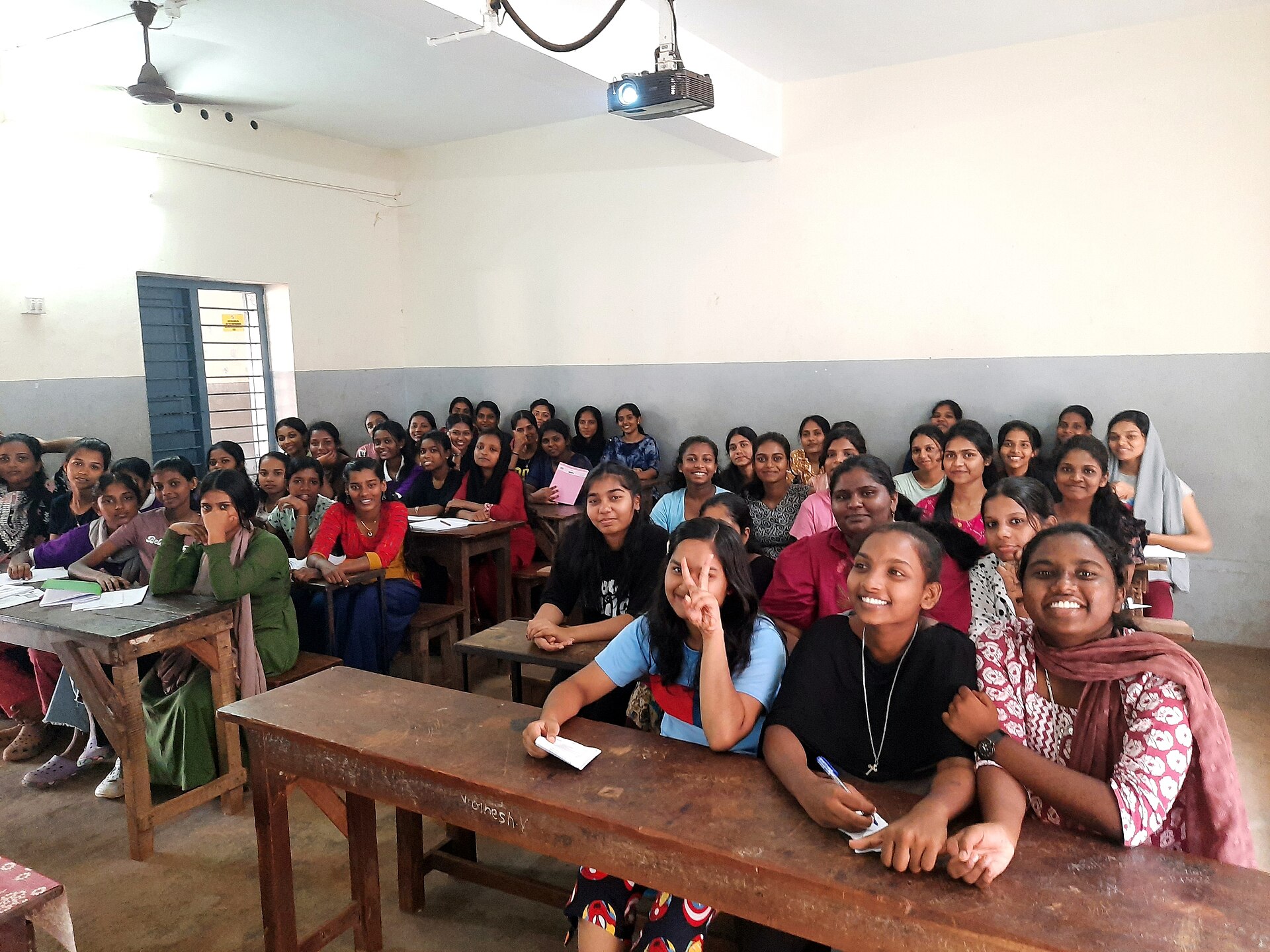
Picture two sixteen-year-olds in the same district. One fills in a scholarship form on her phone, checks her exam results online and watches a free lesson on algebra before bed. The other has never held a smartphone for longer than a few minutes, cannot open an email account and relies on a cyber café owner to apply for anything. They have the same ambitions. Only one of them has the tools to chase them. That gap is what we mean by the digital divide, and closing it through digital literacy for underserved youth is one of the most practical things any community programme can do today.
This is the second article in Samridhi Foundation’s 20-part series on grassroots empowerment, education and social welfare. In our first article we looked at why community-led initiatives last. Now we turn to a skill that now shapes access to almost everything else: the ability to use digital tools safely, confidently and with purpose.
The divide is about more than devices
It is tempting to think the problem is solved once a village has a mobile tower and a few smartphones. In practice, access comes in layers. A young person may live within network range but share a single handset with four family members. They may own a phone but have no data balance for most of the month. They may be online every day but only for videos and chat, without knowing how to search for information, fill in a form or spot a fraud.
Gender adds another layer. India’s National Family Health Survey (NFHS-5, 2019–21) found that only about one in three women had ever used the internet, compared with more than half of men. In rural areas, the share of women who had used the internet was roughly half that of women in towns and cities. For many adolescent girls, the phone in the house belongs to someone else, and time on it is rationed.
So when we talk about bridging the divide, we mean four things at once:
- Access: a device and a connection that a young person can actually use when they need it.
- Affordability: data, repairs and charging that the household can sustain.
- Ability: the skills to use digital tools for learning, work and public services, not just entertainment.
- Agency: the confidence, permission and safety to use those tools independently.
Why digital literacy matters so much for young people
Learning does not stop at the school gate
Much of today’s free learning material, from government e-learning platforms to recorded lessons in regional languages, lives online. A student who can find and use these resources can revise at home, catch up after missing classes and explore subjects their school cannot offer. The school closures of 2020 and 2021 showed how quickly children without devices or skills fell behind, and many have not fully caught up.
Jobs increasingly begin on a screen
Job portals, apprenticeship registrations, online interviews and digital payments are now routine, even for entry-level and informal work. Basic skills such as typing, using a spreadsheet, writing a clear email or creating a simple CV often decide who gets shortlisted. For young people in small towns, digital skills can also open doors to remote work and small online businesses.
Rights and entitlements are moving online
Scholarships, ration entitlements, pension applications, land records and bank services are all increasingly delivered digitally. A digitally literate young person often becomes the family’s link to these services, helping parents and grandparents claim what they are owed without paying middlemen.
What works on the ground
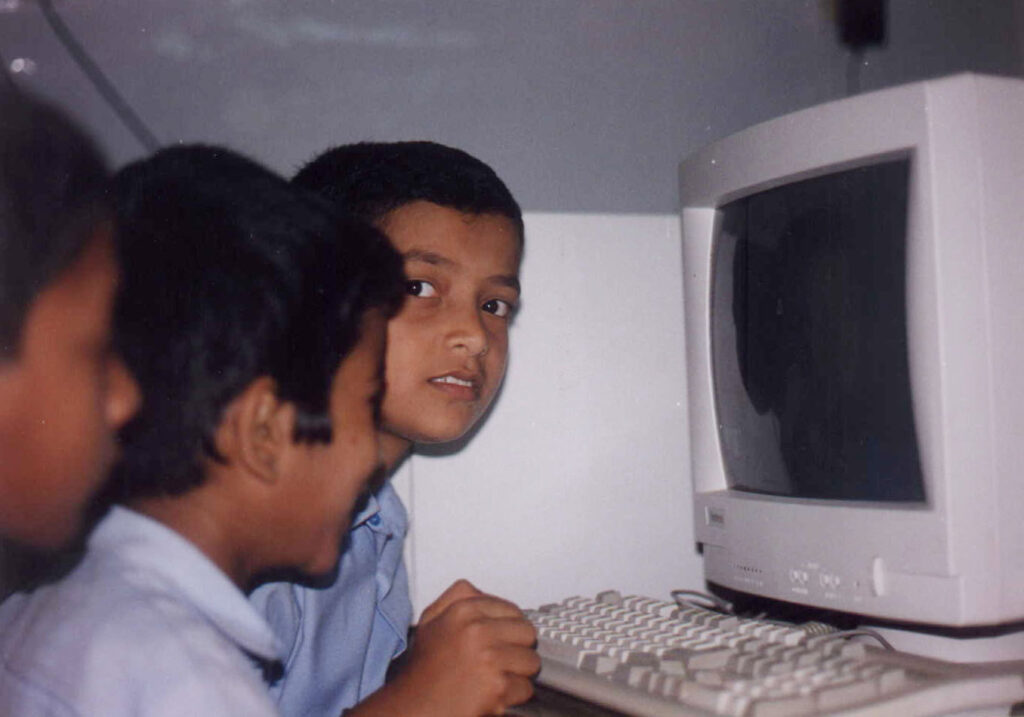
India has invested heavily in this area. The Pradhan Mantri Gramin Digital Saksharta Abhiyan (PMGDISHA), the national rural digital literacy scheme, set out to make six crore rural citizens digitally literate and has reported training more than 6.39 crore people. Schemes like this create a foundation. NGOs and community groups add what large programmes find hardest: follow-up, trust and relevance to local lives. From our experience and that of practitioners across the sector, a few principles stand out.
1. Start with the learner’s real goals
A course built around abstract computer parts loses people quickly. A course built around “apply for your scholarship”, “make a UPI payment safely” or “find a job opening near you” keeps them coming back. Tie every lesson to something the learner wants to do this month.
2. Teach in the language people think in
Instruction in Hindi, Maithili, Bhojpuri or other local languages, with English terms introduced gradually, removes a major barrier. Many apps and phones already support Indian languages. Learners simply need to be shown how to switch them on.
3. Use peer trainers and local centres
Young people often learn fastest from someone a few years older from their own community. Training local youth as digital volunteers, and running sessions in a school, panchayat building or community hall, keeps costs low and builds a pool of mentors who stay after the project ends.
4. Design deliberately for girls
Girls are more likely to attend when sessions are close to home, held at convenient times, led by women trainers and explained to parents beforehand. Some programmes run separate girls’ batches or lend devices for use at the centre so that a girl’s learning does not depend on access to a family phone.
5. Make online safety part of every lesson
Digital literacy without safety can do harm. Learners need to know how to protect passwords and OTPs, recognise fraud calls and fake links, set privacy controls, and report harassment. These lessons are especially important for girls and first-time users, and parents benefit from them too.
Measuring progress honestly
Counting how many people attended a session tells us little. Better indicators include how many learners can complete a real task unaided (sending an email, filling in an online form, making a safe payment), how many use these skills a few months later, and what changed as a result: a scholarship received, a job application submitted, a family entitlement claimed. Short practical tests at the start and end of a course, followed by a check-in after three to six months, give a far truer picture than attendance sheets.
How donors, CSR partners and volunteers can help
- Fund the whole journey, not just hardware. Devices without trainers, data and maintenance often end up locked in a cupboard.
- Support community digital centres. A shared space with a few devices, reliable power and a trained facilitator can serve hundreds of young people a year.
- Offer skilled volunteering. IT professionals can mentor trainers, build simple local-language content or run career sessions, online or in person.
- Back girls’ access specifically. Earmark resources for women trainers, girls-only batches and safe transport where needed.
- Link learning to opportunity. Connect trained youth with internships, apprenticeships and entry-level roles in your own organisation or supply chain.
The bigger picture
India’s digital public infrastructure, from Aadhaar-linked services to UPI payments, has been built at remarkable speed. Its promise will only be fully realised when every young person, whether in a metro or a remote hamlet, can use it with skill and confidence. Digital literacy is no longer an extra subject. It is a basic life skill, as essential today as reading and arithmetic were a generation ago.
Key Takeaways for Social Impact
- The digital divide has four layers: access, affordability, ability and agency. Devices alone do not close it.
- Girls and rural youth face the widest gaps, so programmes need to be designed with them in mind from the start.
- Effective digital literacy is goal-based, taught in local languages, led by peers and anchored in community centres.
- Online safety must be built into every lesson, not added as an afterthought.
- Measure real tasks and real outcomes, such as forms filed, entitlements claimed and jobs applied for, rather than attendance alone.
- Donors and CSR partners add the most value by funding trainers, centres and links to opportunity alongside hardware.
Would you like to help a young person take their first confident steps online? Get in touch with Samridhi Foundation to volunteer as a digital mentor, support a community learning centre or partner with us on youth skilling. Next in this series: how women’s self-help groups create a ripple effect across whole communities.