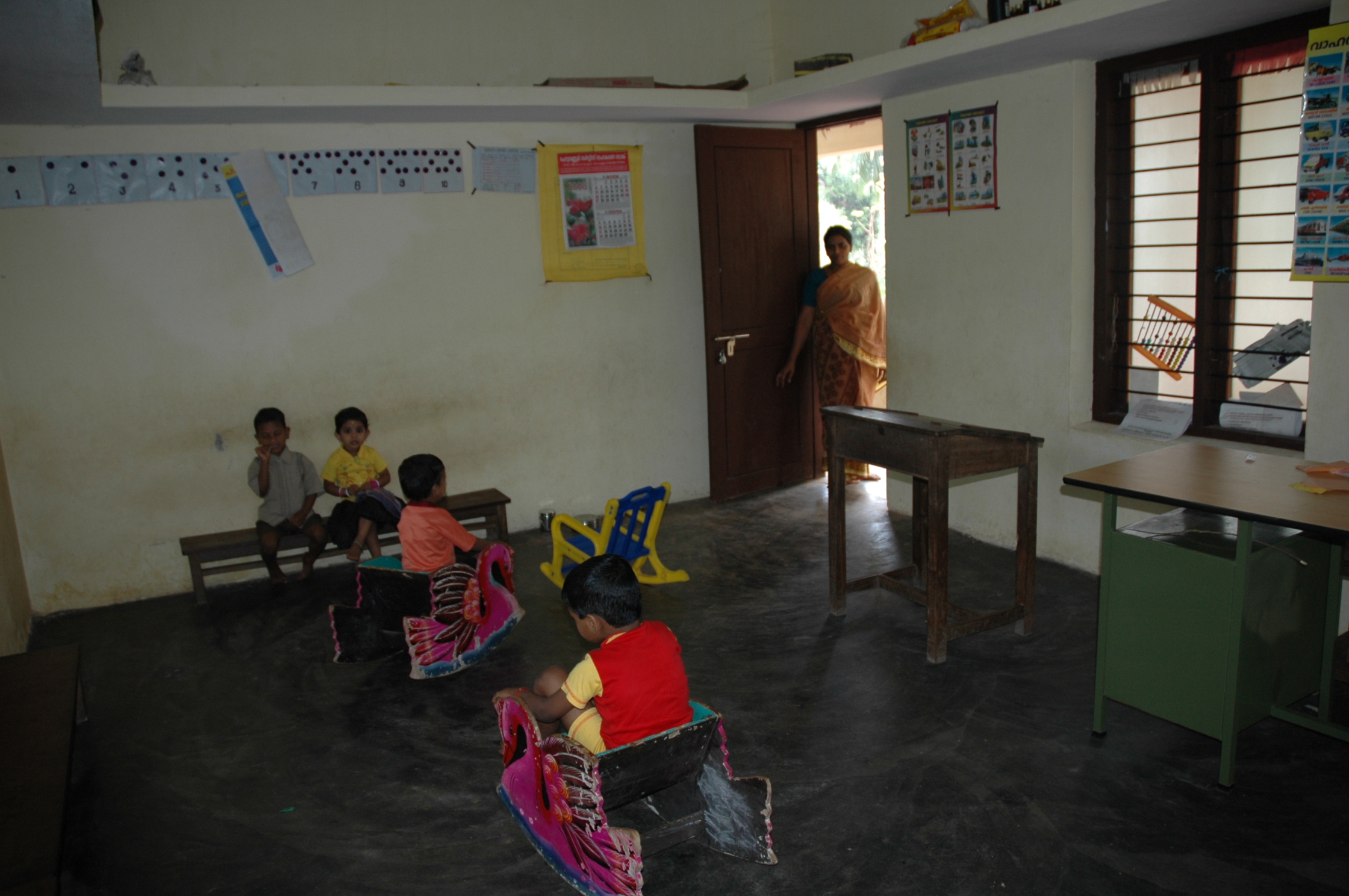
A child’s first six years decide a great deal. The brain grows fastest in this period, height lost to poor nutrition is hard to make up later, and a child who starts school without basic readiness often falls further behind each year. Food, learning and safety are usually handled by different departments and different schemes. A child experiences them as one day: what she ate in the morning, whether someone taught her a song or a number, and whether the place she spent the afternoon was safe.
This is the fourth article in Samridhi Foundation’s 20-part series on grassroots empowerment, education and social welfare. The last one looked at women’s self-help groups. Here we look at holistic child development: why nutrition, early education and protection work best together, what India’s public systems already offer, and where community organisations can help.
What the latest numbers show
The sixth National Family Health Survey (NFHS-6), carried out in 2023-24 and released by the Union health ministry on 29 May 2026, shows clear progress on one measure. Stunting among children under five, meaning low height for their age, fell from 35.5 per cent in NFHS-5 to 29.3 per cent. Severe wasting fell from 7.7 to 5.2 per cent.
Other measures barely moved. Wasting, or low weight for height, went from 19.3 to 19 per cent, and underweight from 32.1 to 31.8 per cent. Exclusive breastfeeding for the first six months dropped from 63.7 to 55.8 per cent. The national averages also hide wide gaps between states. Jharkhand recorded stunting of 41.1 per cent, Rajasthan 39.7 per cent and Bihar 35.7 per cent.
Put simply, about three in ten young children are still too short for their age and close to one in five is too thin for their height. Many of them live in the poorest households and districts, which is where community work counts most.
Why food, learning and safety belong together
It is easy to treat these as three separate problems. In practice each depends on the others.
- A hungry child struggles to concentrate, so even a good teacher achieves less.
- A child who feels unsafe at home or on the way to school may stop attending, and then misses the meal served there as well.
- A child who is often ill because of poor sanitation loses much of the benefit of the food she eats.
- A mother who is poorly fed or anaemic during pregnancy is more likely to have a low birth weight baby, so the work starts before birth.
The most useful programmes look at the whole child. They ask what she eats, whether she is growing, whether she is learning and whether she is safe, and they follow up when any of these slips.
The public systems already in place
India has large programmes for each of these needs. NGOs get the most done when they help these services work better on the ground. Building a parallel system is rarely worth the cost.
Anganwadi centres for the under-sixes
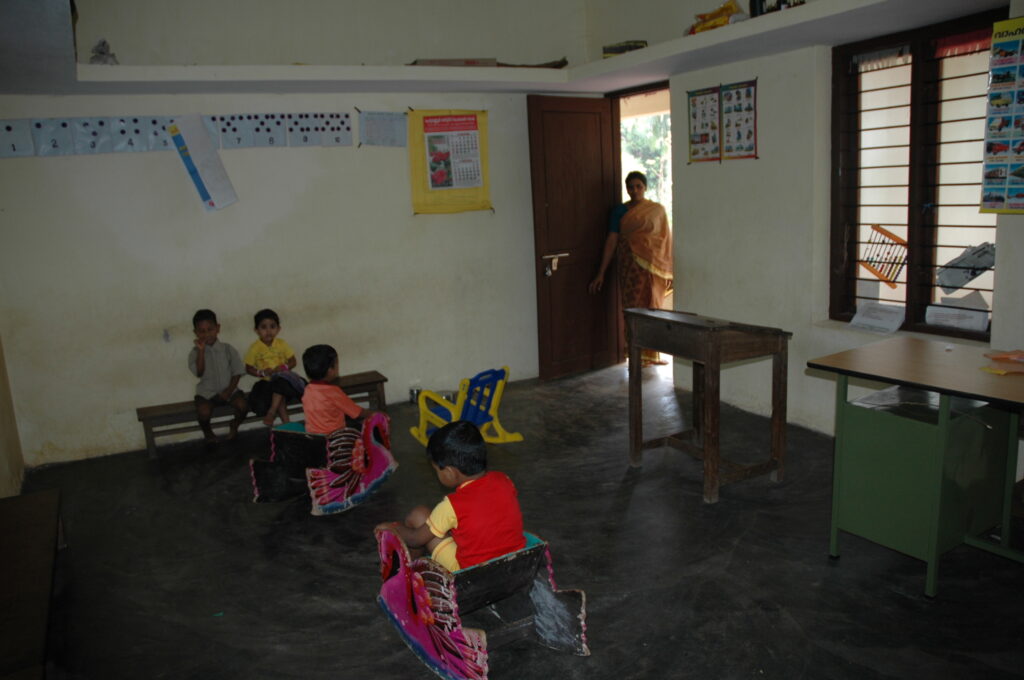
Anganwadi centres began in 1975 under the Integrated Child Development Services scheme and now run under Mission Saksham Anganwadi and Poshan 2.0. Each centre offers six services to young children, pregnant women and nursing mothers: supplementary nutrition, pre-school education, nutrition and health education, immunisation, health check-ups and referral to health facilities. The last three are delivered with the National Health Mission.
Anganwadi workers are expected to measure the height and weight of every child under six once a month and record it on the Poshan Tracker app. Government figures show that by May 2026 the app was monitoring the growth of more than 6.3 crore children under five, about 94 per cent of those registered. For early learning, centres follow Navchetana, a framework for stimulation from birth to age three, and Aadharshila, the national curriculum for children aged three to six launched in March 2024.
Hot meals in school
Once children reach school, PM POSHAN, earlier called the mid-day meal scheme, provides one hot cooked meal a day in Bal Vatika (pre-primary) and Classes 1 to 8 of government and government-aided schools. The Ministry of Education told Parliament in December 2025 that the scheme covers about 11 crore children in more than 10.35 lakh schools. The government has also said that around 8.5 crore children actually eat the meal on a typical day, and that meals are served on about 220 days a year.
The gap between children enrolled and children eating is worth noticing. So is the drop in schools covered, from about 11.19 lakh in 2020-21 to about 10.35 lakh in 2024-25. Local volunteers are well placed to notice when meals in a school become irregular or stop, and to raise it with the school and the block office.
Protection
Child Helpline 1098 is a free, round-the-clock service for children in distress, set up under the Juvenile Justice Act. Under Mission Vatsalya it has been linked with the national emergency number 112. Each district has a District Child Protection Unit and a Child Welfare Committee to follow up cases.
What a safe space for children looks like
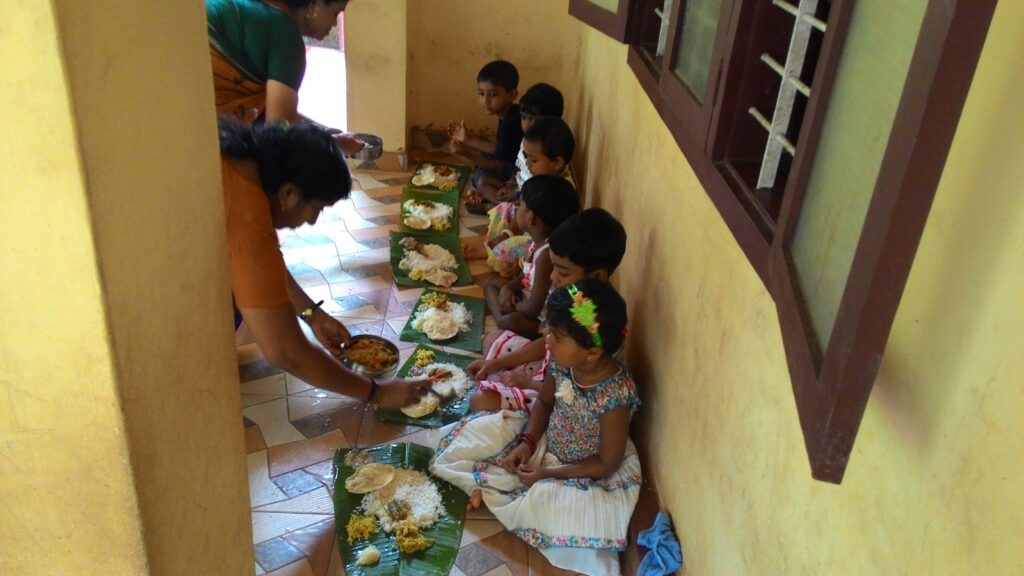
A safe space is more than a building. For a young child it means:
- a clean, dry room with safe drinking water and a toilet children can actually use;
- adults who are known to the community, trained, and never alone with a single child behind closed doors;
- a clear way for children and parents to raise a worry, and a named person who acts on it;
- time to play, which is how young children pick up language, numbers and getting along with others;
- a safe route to and from the centre or school.
Most of these cost little. They depend on rules being written down, explained to staff and parents, and checked from time to time.
Where community organisations make a difference
Making sure services reach every child
The children most likely to miss out are those in migrant families, remote hamlets and households without the right papers. Volunteers who know a village can list children who are not registered at the Anganwadi or not attending school, and help their families enrol.
Supporting Anganwadi workers
One worker and one helper often handle cooking and feeding, growth monitoring, pre-school teaching, home visits and record keeping. Play materials, picture books, basic kitchen equipment and training in early learning activities can lift the quality of what children get each day.
Improving what is on the plate
Kitchen gardens at schools and centres, local millets and pulses, and eggs or fruit where families are happy with them add variety to the basic meal. Mothers’ groups can keep an eye on meal quality and hygiene, which also builds trust in the service.
Talking with parents
The fall in exclusive breastfeeding is a reminder that nutrition starts at home. Short, practical sessions with mothers and grandmothers on breastfeeding, feeding from six months, handwashing and the warning signs of illness are often more useful than printed material on its own.
Following up when something goes wrong
Growth records only help if someone acts on them. A child whose weight falls two months running needs a home visit and, if necessary, a referral. In the same way, a child who suddenly stops coming, or seems frightened, needs an adult who will ask why and, where needed, call 1098.
What donors and CSR partners can fund
Money goes furthest when it fills gaps in public services and lasts long enough to show results. Useful areas include:
- play and learning kits, and training for Anganwadi workers;
- drinking water, toilets and repairs at centres and schools;
- kitchen gardens and nutrition counselling for mothers;
- community volunteers who track enrolment, attendance and growth;
- child protection training for staff, parents and local leaders.
A few simple measures make progress easier to see: the share of children weighed each month, the number moving out of the underweight range, and attendance at the centre or school.
Key Takeaways for Social Impact
- NFHS-6 shows stunting among children under five fell from 35.5 to 29.3 per cent, while wasting and underweight hardly changed.
- Nutrition, early learning and protection depend on one another, so programmes work best when they look at the whole child.
- Anganwadi centres, PM POSHAN and Child Helpline 1098 already reach crores of children. NGOs add most value by helping these services work better locally.
- A safe space needs clean facilities, trained adults, clear safeguarding rules and time to play.
- Community volunteers can find children who are missing out and follow up when growth or attendance slips.
- Donors and CSR partners help most by funding for long enough to see results and by tracking a few simple measures.
Would you like to help children in your area, as a volunteer, a trainer or a funding partner? Get in touch with Samridhi Foundation to find out how. Next in this series: vocational training programmes that create sustainable livelihoods.