
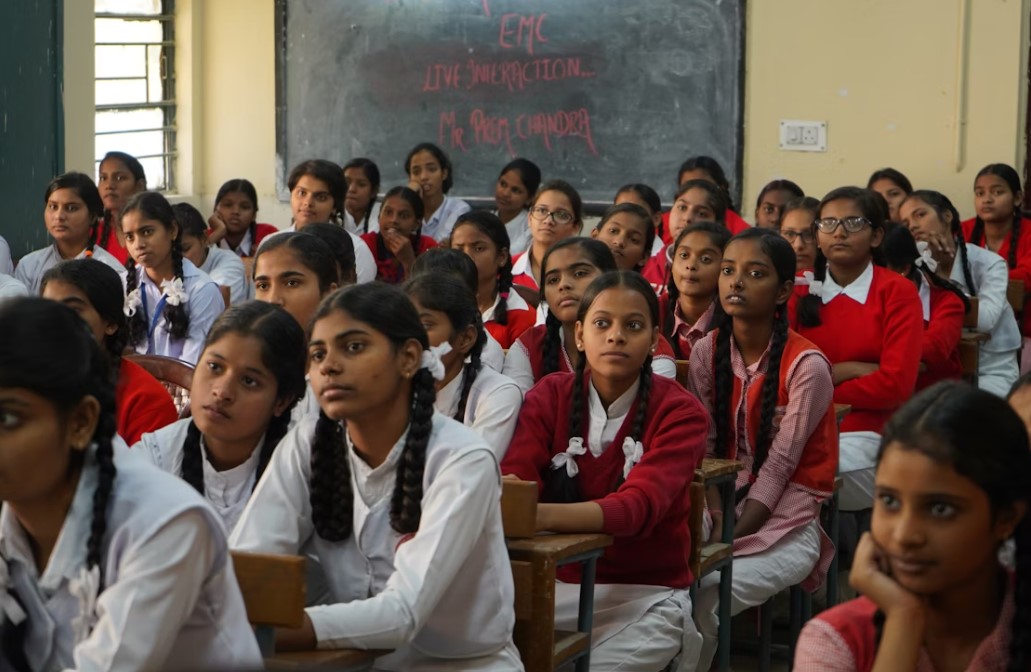
In the heart of rural India, education stands as both a promise and a challenge. For decades, marginalised communities have battled poverty, social exclusion, and unequal access to opportunities. Yet, amidst these challenges, education emerges as the most powerful instrument of change – a bridge that connects disadvantaged communities to equality, dignity, and hope.
Education is not just about literacy or the ability to read and write; it is about empowerment. In villages where traditional roles and economic hardships have long dictated the trajectory of lives, schools provide an alternative future. They represent possibilities – for young girls to dream beyond early marriage, for boys to break free from generational cycles of labour, and for families to envision a life not limited by deprivation.
However, rural India’s education system is riddled with systemic challenges. Inadequate infrastructure, shortage of trained teachers, and poor access to digital resources continue to weaken learning outcomes. Girls face additional barriers – from household responsibilities to concerns of safety and deep-rooted social norms that often prevent them from pursuing education. Bridging these gaps requires more than policy intent; it demands collective action, innovation, and the mobilisation of communities.
The significance of education in promoting equality cannot be overstated. For rural children, stepping into a classroom is often their first experience of equality. Here, caste hierarchies and socio-economic divisions can blur, replaced by the shared pursuit of knowledge. Education fosters critical thinking, confidence, and awareness of rights, enabling children and their families to challenge oppressive systems. It lays the foundation for a generation that does not merely survive but thrives.
Moreover, the ripple effect of education extends beyond individual achievement. Educated communities are better equipped to access healthcare, participate in local governance, adopt sustainable farming practices, and demand accountability from institutions. Women’s education, in particular, has a transformative impact – reducing child marriage, lowering maternal mortality, and improving household income. When a girl in rural India completes her education, she carries her family and community along with her, creating cycles of progress that last for generations.
The digital revolution offers new opportunities to bridge the rural-urban divide in education. From low-cost tablets to community learning centres, technology has the potential to democratise knowledge. Yet, access remains uneven, highlighting the urgent need for public-private partnerships and grassroots initiatives. Programmes that provide digital literacy, vernacular content, and locally relevant skills can ensure that rural children are not left behind in an increasingly knowledge-driven economy.
At Samridhi Foundation, we believe that true equality in rural India will be achieved when every child, regardless of gender, caste, or economic background, has access to quality education. Our interventions focus not only on building infrastructure and capacity but also on changing mindsets. Through community engagement, awareness drives, and partnerships with local institutions, we work to create environments where education is seen as a right, not a privilege.
Education must also be aligned with employability and livelihood opportunities. Rural youth need skills that enable them to contribute meaningfully to the economy while staying rooted in their communities. Integrating vocational training, entrepreneurship, and life skills into the education system can create pathways to dignity and self-reliance.
In conclusion, education is more than a tool for knowledge acquisition; it is the bridge that connects rural India to equality. By investing in education, we invest in justice, empowerment, and resilience. We invest in breaking the shackles of poverty and discrimination, giving every child the chance to shape their own destiny. The road ahead may be long and challenging, but with education as the cornerstone, the bridge to equality is not just possible – it is inevitable.